
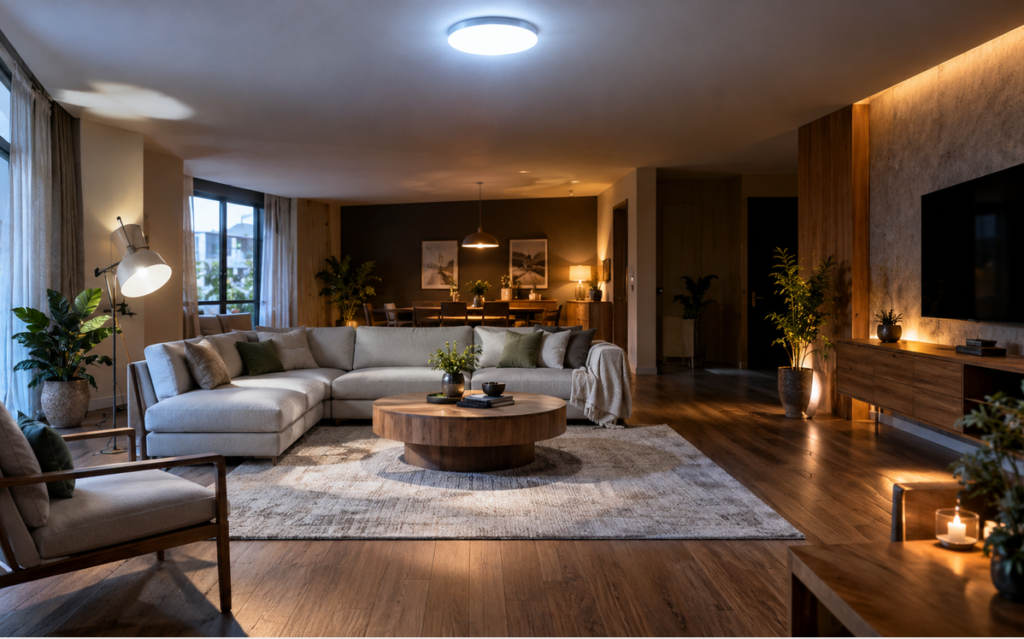

Walk into any poorly lit room and you’ll feel it before you can explain it. Something feels off, maybe too harsh, maybe too dim, maybe just wrong. Lighting shapes how a space feels and functions, yet it’s one of the most overlooked elements in home and office design.
Many homeowners and businesses make the same lighting mistakes without realizing the impact. A single overhead bulb might technically light a room, but it rarely makes that room comfortable or visually appealing. These missteps affect everything from your mood to your productivity, and they can make even a beautifully furnished space feel flat and uninviting.
Understanding where lighting design goes wrong is the first step toward fixing it. This guide walks through the most common interior lighting mistakes, how they affect comfort and appearance, and what you can do to create spaces that feel as good as they look.
Top Interior Lighting Mistakes
Relying Only on Overhead Lighting
One of the most frequent mistakes is depending entirely on a single overhead fixture. This approach skips layered lighting design services that combine multiple light sources for a balanced effect. Without layering, rooms end up flat, with harsh shadows in some corners and insufficient light in others.
Choosing the Wrong Bulb Temperature
Bulb temperature matters more than most people realize. Cool white bulbs can make a living room feel clinical, while warm bulbs in a workspace can leave it feeling dim and sleepy. Picking the wrong temperature for a room’s purpose throws off the entire atmosphere.
Ignoring Natural Light
Natural light is often an afterthought in lighting plans. Furniture placement, window treatments, and room layout can all block or waste available daylight. Failing to account for natural light means relying more heavily on artificial sources, even during the day.
Installing Fixtures Without Considering Room Purpose
A reading nook, a kitchen island, and a hallway all need different lighting approaches. Installing the same type of fixture everywhere, regardless of how the space is used, leads to lighting that doesn’t support the actual activities happening in that room.
Impact on Comfort and Visual Appeal
Eye Strain and Fatigue
Inadequate lighting forces your eyes to work harder, which leads to strain and fatigue over time. This is especially true in workspaces where poor lighting design services result in dim desks or glaring screens, both of which make focused work uncomfortable.
Mood and Productivity
Lighting has a direct connection to how people feel and perform in a space. Dim or mismatched lighting can make a room feel gloomy, while overly bright or cold lighting can feel sterile. In offices, this often translates to lower energy and reduced productivity among employees.
Visual Appeal and Balance
A room’s visual appeal depends heavily on how light interacts with its colors, textures, and furnishings. Unbalanced or dim lighting flattens these details, making even well-designed spaces look uninspired. Good lighting, on the other hand, highlights architectural features and decor in a way that feels intentional.
Shadows and Unflattering Spaces
Poor fixture placement often creates unwanted shadows, whether across a kitchen countertop or a bathroom mirror. These shadows don’t just look unappealing, they can make everyday tasks like cooking or applying makeup genuinely more difficult.
Solutions and Best Practices
Implement Layered Lighting
The most effective fix is layering three types of light: task lighting for specific activities, ambient lighting for overall illumination, and accent lighting to highlight features or decor. Together, these layers create depth and flexibility that a single light source never could.
Consult Professional Lighting Design Services
While some fixes are simple, achieving a fully balanced lighting plan often benefits from expert input. Professional lighting design services can assess a space’s layout, natural light, and purpose to recommend the right combination of fixtures and placements for lasting results.
Choose the Right Bulb Temperature
Match bulb temperature to room function. Warmer tones suit relaxing spaces like bedrooms and living rooms, while neutral or cooler tones work better in kitchens, bathrooms, and home offices where focus matters more.
Position Fixtures Strategically
Think about where shadows fall before installing fixtures. Positioning lights to the side rather than directly overhead, for example, can eliminate harsh shadows on work surfaces and faces, creating a softer, more flattering ambiance throughout the space.
Small Changes, Lasting Impact
Lighting mistakes are common, but they’re also fixable. Addressing issues like poor layering, mismatched bulb temperatures, and inconsiderate fixture placement can transform how a space feels day to day. Comfort and visual appeal aren’t separate goals, they’re connected, and good lighting is often the thread that ties them together.
If your home or office doesn’t feel quite right, the lighting might be the reason. Consider working with professional lighting design services to identify what’s missing and create a plan that brings both comfort and style into balance. Sometimes the smallest adjustments make the biggest difference.
Don’t miss out — discover more stories only on Meet Celebrity.