
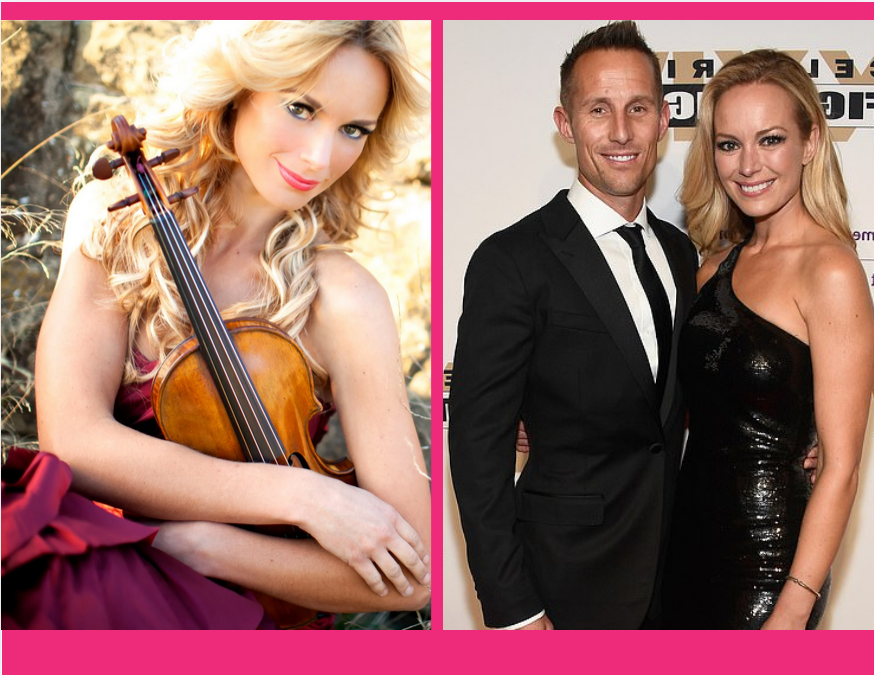

Few modern musicians have managed to move as effortlessly between concert halls, film studios, chamber ensembles, and celebrity collaborations as Caroline Campbell. Known for her refined violin technique and genre-crossing performances, she has built a reputation as one of the most adaptable violinists of her generation. From prestigious symphony appearances to performances alongside global music stars, her career reflects the evolving landscape of modern classical music.
Born in Albany, New York, in 1980, the accomplished American violinist has become widely respected for combining classical discipline with contemporary musical flexibility. Audiences admire her ability to interpret traditional repertoire while also contributing to jazz, film, and popular music projects. Her artistic range has made her recognizable not only within classical circles but also among mainstream music fans worldwide.
Over the years, her performances at venues such as Carnegie Hall, the Kennedy Center, and the Sydney Opera House have strengthened her international reputation. At the same time, collaborations with artists like Andrea Bocelli, Sting, and Barbra Streisand introduced her talent to broader audiences. Her story is one of dedication, versatility, and musical excellence.
| Field | Details |
|---|---|
| Full Name | Caroline Campbell |
| Profession | American Violinist, Soloist, Chamber Musician |
| Known For | Classical, jazz, film, and crossover violin performances |
| Birth Year | 1980 |
| Birthplace | Albany, New York, United States |
| Nationality | American |
| Genres | Classical, Jazz, Film Music, Popular Music |
| Instruments | Violin |
| Famous Role | First Violinist of the Sonus Quartet |
| Quartet Members | Kathleen Sloane, Neel Hammond, Vanessa Freebairn-Smith |
| Career Type | Solo performances, orchestral concerts, chamber music, studio recordings |
| Major Orchestras | Cleveland Orchestra, Los Angeles Philharmonic, Indianapolis Symphony, Shanghai Symphony, Boston Pops |
| Famous Venues | Carnegie Hall, Kennedy Center, Sydney Opera House |
| International Performances | Kuala Lumpur, Sydney, United States, and other global venues |
| Notable Collaborations | Sting, Andrea Bocelli, Steven Tyler, Adam Levine, Michael Bublé, Rod Stewart, David Foster, Seal, Barbra Streisand |
| Nickname | “Violinist to the Stars” |
| Musical Strength | Cross-genre versatility and technical precision |
| Performance Style | Combines classical elegance with modern crossover appeal |
| Recording Work | Film scores, studio recordings, and popular music projects |
| Marital Status | Divorced |
| Former Spouse | John C. Miller |
| Marriage Duration | 2005–2018 |
| Public Image | Elegant, versatile, technically skilled, collaborative |
| Career Highlights | International performances, celebrity collaborations, chamber music leadership |
| Years Active | Professional career spanning multiple decades |
| Legacy | Recognized for bridging classical music with mainstream entertainment |
Early Life and Background
The biography of Caroline Campbell begins in Albany, New York, where she was born in 1980. Although detailed information about her childhood remains relatively private, it is clear from her professional accomplishments that music became an important part of her life from an early age. Like many elite violinists, she likely spent years mastering technical precision, performance discipline, and the demanding routines required to excel in classical music.
Growing up during a period when musicians increasingly explored crossover opportunities, she developed an artistic identity that extended beyond traditional orchestral boundaries. Instead of limiting herself to one musical category, she embraced versatility as a defining feature of her career. This openness later allowed her to succeed in environments ranging from chamber ensembles to mainstream entertainment stages.
Her early exposure to different forms of music appears to have influenced her later career direction. While some classical performers remain focused exclusively on orchestral work, she pursued a broader artistic vision. That willingness to explore multiple genres eventually became one of her greatest professional strengths and helped distinguish her from many contemporaries in the classical music world.
Education and Musical Training
Although publicly available details regarding her formal education are limited, her technical command of the violin strongly reflects years of advanced musical training. Professional violinists operating at her level typically undergo intensive preparation involving tone production, sight-reading, ensemble coordination, and solo performance development. Her polished performances clearly demonstrate mastery in these areas.
In addition to classical expertise, her career also reveals a deep understanding of stylistic adaptability. Transitioning successfully between symphonic performances, studio recordings, jazz interpretations, and pop collaborations requires exceptional musicianship. Such flexibility can only develop through extensive experience and broad musical exposure.
Her playing style combines classical elegance with emotional accessibility. This balance has become increasingly valuable in contemporary music culture, where audiences appreciate artists capable of crossing traditional genre lines. Through disciplined training and artistic curiosity, she built a career that appeals to both dedicated classical listeners and wider entertainment audiences.
Rise as a Professional Violinist
As her professional career developed, Caroline Campbell became recognized as a highly skilled soloist and chamber musician. Her performances with renowned orchestras established her credibility within elite classical circles and demonstrated her ability to interpret demanding repertoire at the highest level.
She has appeared with respected ensembles including the Cleveland Orchestra, the Los Angeles Philharmonic, the Indianapolis Symphony, the Shanghai Symphony, and the Boston Pops. These performances showcased not only technical excellence but also the emotional depth and stage presence expected from internationally respected violinists.
Her growing reputation led to invitations to perform in iconic venues around the world. Appearances at Carnegie Hall and the Kennedy Center placed her among distinguished classical performers, while international engagements expanded her global audience. Concerts in locations such as Kuala Lumpur and the Sydney Opera House further demonstrated the worldwide demand for her artistry.
Unlike many musicians who remain confined to one performance environment, she embraced a career path that balanced orchestral prestige with broader creative opportunities. This approach allowed her to remain relevant across multiple sectors of the music industry while continuously expanding her artistic reach.
Chamber Music and the Sonus Quartet
One of the most important aspects of her professional identity is her work with the Sonus Quartet, a Los Angeles-based string ensemble known for its innovative musical style. In the group, she performs as the first violinist alongside Kathleen Sloane, Neel Hammond, and Vanessa Freebairn-Smith.
The quartet gained attention for blending classical performance traditions with contemporary influences. Their repertoire often incorporates film music, crossover arrangements, and modern interpretations that appeal to diverse audiences. This artistic philosophy closely matches Campbell’s own reputation for versatility and openness to experimentation.
Playing first violin in a chamber ensemble requires leadership, communication, and exceptional listening skills. Chamber music differs significantly from solo or orchestral performance because every musician contributes equally to the overall interpretation. Her role within the quartet highlights not only her technical ability but also her collaborative instincts and musical maturity.
The Sonus Quartet has become especially respected for bringing string music to audiences who may not typically attend classical performances. Through innovative arrangements and modern presentation styles, the ensemble has helped expand appreciation for chamber music in contemporary entertainment culture.
Collaborations With Famous Artists
A major reason Caroline Campbell became widely recognized outside classical music circles is her impressive list of collaborations with internationally famous performers. Her ability to adapt her violin playing to different genres made her highly sought after for crossover performances and live productions.
Throughout her career, she has reportedly performed with artists including Sting, Andrea Bocelli, Steven Tyler, Adam Levine, Michael Bublé, Rod Stewart, David Foster, Seal, and Barbra Streisand. These collaborations demonstrate her remarkable versatility and ability to support diverse musical styles while maintaining her own artistic identity.
Working with artists from different genres requires flexibility, professionalism, and confidence. Classical musicians entering mainstream entertainment settings must adjust to varying performance expectations, rehearsal styles, and audience dynamics. Campbell’s success in these collaborations reflects her adaptability and strong stage presence.
Her association with major entertainers also contributed to her reputation as a “violinist to the stars.” This nickname reflects both her technical reputation and her visibility within high-profile music circles. Rather than separating classical and popular music, she successfully integrated both worlds into a cohesive career.
Musical Style and Artistic Versatility
One of the defining characteristics of her career is her extraordinary musical range. She performs across classical, jazz, film, and popular music genres, each requiring distinct interpretive approaches and technical adjustments. Few violinists manage to navigate such diverse musical landscapes with equal confidence.
Classical violin performance often emphasizes precision, phrasing, and historical interpretation. Jazz, meanwhile, relies more heavily on rhythmic flexibility and improvisational awareness. Film music requires emotional storytelling, while popular music demands accessibility and stage adaptability. Campbell’s ability to shift naturally between these styles highlights her deep musical intelligence.
Her crossover success also reflects broader changes within the music industry. Modern audiences increasingly value artists capable of transcending genre labels and connecting with listeners through multiple formats. By embracing orchestral work, studio recordings, celebrity collaborations, and chamber music, she embodies the contemporary model of a multidimensional musician.
This artistic flexibility has allowed her to maintain relevance in an evolving entertainment landscape. Instead of remaining confined to traditional concert settings, she expanded her reach while preserving the credibility associated with classical training.
Performances in Major Venues Worldwide
The international scope of her career is another significant aspect of her biography. Performing in world-famous venues is often considered a mark of distinction for classical musicians, and Campbell’s résumé includes appearances at some of the most respected stages globally.
Her performances at Carnegie Hall and the Kennedy Center reinforced her standing within American classical music. These venues are associated with artistic excellence and host many of the world’s leading performers. Appearing there reflects both professional recognition and audience demand.
Internationally, she has also performed in prestigious cultural centers including the Sydney Opera House. Such appearances demonstrate her global appeal and ability to connect with audiences across different musical traditions and cultural environments.
Live performance remains one of the most important aspects of a violinist’s career because it showcases not only technical ability but also emotional communication. Campbell’s continued success in major venues reflects her skill at creating memorable musical experiences for audiences worldwide.
Recording Work and Film Music Contributions
Beyond live performance, she has also contributed to recording projects involving film scores and crossover productions. Studio recording demands a different set of skills from live concerts, including precision timing, adaptability, and consistency across multiple takes.
Film music, in particular, requires musicians capable of delivering emotional nuance while supporting cinematic storytelling. Her experience in this area highlights another dimension of her artistic range and demonstrates her comfort within highly professional recording environments.
The inclusion of recording work in her career portfolio further distinguishes her from many traditional classical performers. By participating in film and popular music productions, she expanded her audience beyond concertgoers and reached listeners through mainstream entertainment media.
This recording experience also strengthened her reputation as a versatile violinist capable of thriving in both artistic and commercial settings without compromising musical quality.
Personal Life and Privacy
While her professional achievements are well documented, Caroline Campbell has maintained a relatively private personal life. Public records indicate that she was married to John C. Miller from 2005 to 2018. Beyond this information, she has generally chosen to keep family and personal matters away from public attention.
This level of privacy is not uncommon among professional musicians, particularly those who prefer their artistic work to remain the central focus of public interest. By limiting personal exposure, she has maintained an image centered primarily on musicianship and performance excellence.
Despite limited public details about her private experiences, her career continued to flourish during and after her marriage. Her ongoing professional activity demonstrates a sustained commitment to music and artistic development.
Respect for privacy has also contributed to her polished public image. Rather than relying on celebrity culture, she built her reputation through performance quality, collaboration, and consistent artistic achievement.
Public Reputation and Influence
Over time, she has developed a reputation for elegance, professionalism, and artistic versatility. Audiences and collaborators alike recognize her ability to move seamlessly between sophisticated classical repertoire and accessible crossover performances.
Her influence extends beyond technical performance alone. By demonstrating that classical musicians can successfully participate in mainstream entertainment without sacrificing artistic integrity, she helped redefine expectations for modern violinists. Younger musicians increasingly view genre flexibility as an advantage rather than a departure from tradition.
She also represents a broader movement within contemporary music culture where boundaries between genres continue to fade. Artists who can communicate across different musical styles often enjoy greater visibility and wider audience engagement. Campbell’s career serves as a successful example of this evolution.
The combination of orchestral prestige, chamber music leadership, celebrity collaborations, and recording work has allowed her to maintain a unique and respected position in the music industry.
Career Highlights and Achievements
Several accomplishments stand out as defining moments in her professional journey. Performing with world-renowned orchestras established her classical credentials, while collaborations with internationally famous artists expanded her mainstream recognition.
Her membership in the Sonus Quartet added another important dimension to her artistic profile. Chamber music performance requires a different level of communication and ensemble sensitivity than solo appearances, and her success in both settings highlights exceptional musical adaptability.
International tours and performances in iconic venues further strengthened her reputation. These appearances confirmed her status as a globally recognized violinist capable of connecting with audiences from diverse cultural backgrounds.
Perhaps most importantly, her career demonstrates the value of artistic openness. Rather than limiting herself to one musical identity, she embraced opportunities across multiple genres and performance settings. That willingness to evolve became one of the key reasons for her lasting professional success.
Conclusion
Caroline Campbell has built an impressive career defined by versatility, discipline, and artistic excellence. From her beginnings in Albany, New York, to performances on some of the world’s most prestigious stages, she has consistently demonstrated remarkable talent and adaptability.
Her achievements as a soloist, chamber musician, recording artist, and collaborator reflect the changing nature of modern music careers. By moving comfortably between classical, jazz, film, and popular music, she expanded the traditional role of the contemporary violinist.
Whether performing with elite orchestras, leading the Sonus Quartet, or sharing stages with internationally famous artists, she continues to represent a rare combination of technical precision and broad musical accessibility. Her story remains an inspiring example of how classical training and creative flexibility can coexist successfully in today’s entertainment world.
FAQs
Who is Caroline Campbell?
Caroline Campbell is an American violinist known for performing classical, jazz, film, and popular music as both a soloist and chamber musician.
Where was Caroline Campbell born?
She was born in Albany, New York, United States, in 1980.
What is Caroline Campbell famous for?
She is recognized for her performances with major orchestras, her role in the Sonus Quartet, and collaborations with internationally known artists.
Which orchestras has she performed with?
She has appeared with ensembles including the Cleveland Orchestra, Los Angeles Philharmonic, Indianapolis Symphony, Shanghai Symphony, and Boston Pops.
What is the Sonus Quartet?
The Sonus Quartet is a Los Angeles-based string quartet known for blending classical music with contemporary and crossover styles.
Which celebrities has she collaborated with?
Her collaborations reportedly include Andrea Bocelli, Sting, Michael Bublé, Rod Stewart, Seal, and Barbra Streisand.
Was Caroline Campbell married?
Public records indicate that she was married to John C. Miller from 2005 to 2018.
Don’t miss out — discover more stories only on Meet Celebrity.