
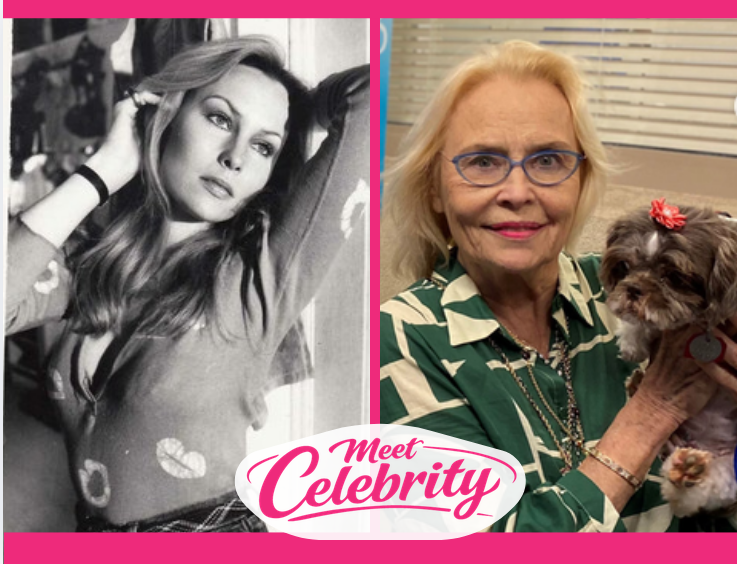

Long before social media influencers turned fame into a daily performance, there were television personalities whose faces became instantly recognizable through commercials, magazine advertisements, and movie screens. Among them was Cornelia Sharpe, a striking model-turned-actress whose career flourished during one of Hollywood’s most transformative decades.
While she never sought the spotlight with the relentless intensity of some contemporaries, Sharpe built a career that reflected both talent and adaptability. From appearing in hundreds of television commercials to sharing the screen with major stars such as Al Pacino and Sean Connery, she became a recognizable face of 1970s entertainment. Her story is not merely about fame; it is about navigating an industry undergoing profound change and finding success across multiple forms of media.
Today, her career remains a fascinating chapter in Hollywood history, offering insight into an era when modeling, television advertising, and film increasingly overlapped.
| Field | Details |
|---|---|
| Full Name | Cornelia Lynn Sharpe |
| Known As | Cornelia Sharpe |
| Profession | Actress, Former Fashion Model |
| Date of Birth | October 18, 1943 |
| Age | 82 years old (as of 2026) |
| Birthplace | Selma, Alabama, United States |
| Nationality | American |
| Height | 6 ft (1.83 m) |
| Parents | Warner Jack Sharpe Jr. (father), Evelyn Horne Sharpe (mother) |
| Raised In | Jacksonville, Florida, USA |
| Education | Graduated from Robert E. Lee High School, Jacksonville, Florida (1961) |
| Career Start | Began as a model and commercial actress, appearing in approximately 200 TV commercials |
| Acting Debut | Kansas City Bomber (1972) |
| Breakthrough Role | Leslie in Serpico (1973) alongside Al Pacino |
| Notable Movies | Serpico (1973), The Reincarnation of Peter Proud (1975), The Next Man (1976), Cover Girls (1977), SHE (1980), Venom (1981), The Adventures of Pluto Nash (2002) |
| Former Spouse | Joseph Gallison (1967–1970) |
| Spouse | Martin Bregman (1981–2018, his death) |
| Children | Marissa Bregman |
| Stepchildren | Michael S. Bregman, Christopher Bregman ( |
| Known For | Successfully transitioning from modeling and television commercials to film acting during the 1970s |
| Years Active | Primarily active from the late 1960s through the early 2000s |
| Legacy | Remembered as a versatile actress who worked in crime dramas, thrillers, television films, and advertising during Hollywood’s New Hollywood era |
Early Life and Family Background
Cornelia Lynn Sharpe was born on October 18, 1943, in Selma. She was the daughter of Warner Jack Sharpe Jr., a dental supplier, and Evelyn Horne Sharpe, who worked as a dental assistant and secretary. Although born in Alabama, she spent much of her childhood in Jacksonville, Florida, where she grew up in a large extended family environment.
Her upbringing was rooted in traditional Southern values, yet she possessed an adventurous spirit from an early age. Friends and family often recalled her energetic personality and mischievous sense of humor. Unlike many aspiring actresses who dreamed of Hollywood from childhood, Sharpe initially considered a more conventional career path.
As a teenager, she graduated from Robert E. Lee High School in Jacksonville in 1961. At the time, few could have predicted that she would eventually become one of the most recognizable commercial models of her generation.
A Chance Discovery and the Beginning of a Modeling Career
The path that led Cornelia Sharpe into entertainment was anything but ordinary. As a young woman, she developed an interest in dance and performance. According to accounts of her early life, legendary ballet choreographer George Balanchine noticed her potential during a Florida visit, encouraging her to pursue opportunities in New York.
Moving to New York opened doors she never anticipated. What began as an opportunity connected to dance soon evolved into a modeling career. A television commercial appearance became a turning point, introducing her to the advertising world at a time when television commercials were becoming cultural events in their own right.
Sharpe possessed a rare combination of elegance, confidence, and relatability. She could appear glamorous without seeming distant, a quality that advertisers valued immensely. Over the next several years, she appeared in approximately 200 television commercials, making her one of the most familiar faces on American television during the late 1960s and early 1970s.
Cornelia Sharpe’s Rise in Television Advertising
The advertising industry of the late 1960s was vastly different from today. Commercials were often mini-dramas designed to create emotional connections with audiences. Models were expected to communicate personality and trustworthiness in mere seconds.
Cornelia Sharpe excelled in this environment. Her expressive face and natural screen presence allowed her to stand out among countless aspiring performers. Rather than relying solely on beauty, she demonstrated an ability to tell a story through subtle gestures and expressions.
Industry observers took notice. Her growing reputation in commercials transformed her into a sought-after talent, and advertisers recognized that audiences responded positively to her presence. This visibility would ultimately provide the platform she needed to transition into acting, a move many successful models attempted but relatively few achieved with lasting credibility.
Entering the World of Acting
Sharpe’s move into acting occurred gradually rather than overnight. Her first major opportunities came through stage productions, where she gained practical experience and developed the skills needed to move beyond commercial work.
One of her earliest notable stage appearances came in The Penny Wars, followed by involvement in theatrical productions that helped sharpen her craft. She also became interested in studying acting more seriously, recognizing that sustained success in entertainment required more than physical appearance.
This dedication paid off. By the early 1970s, Sharpe had begun receiving film roles, allowing her to showcase a broader range of abilities. Audiences who knew her from commercials were introduced to a performer capable of handling dramatic material and complex characters.
Breakthrough Role in Serpico
For many film enthusiasts, Cornelia Sharpe is best remembered for her role in the acclaimed 1973 crime drama Serpico. Directed by Sidney Lumet and starring Al Pacino, the film chronicled the real-life experiences of New York police officer Frank Serpico as he battled corruption within the police department.
Sharpe portrayed Leslie, one of the important figures in Serpico’s personal life. Although not the film’s central character, her performance contributed emotional depth to a story dominated by institutional conflict and moral struggle.
The movie became both a critical and commercial success, earning widespread acclaim and helping cement Pacino’s status as one of Hollywood’s leading actors. For Sharpe, appearing in such a respected production significantly elevated her profile and demonstrated that she could hold her own in serious dramatic cinema.
Expanding Her Film Career
Following Serpico, Cornelia Sharpe continued building an impressive film résumé. She appeared in several projects that highlighted her versatility and willingness to explore different genres.
Her early film credits included roles in Kansas City Bomber, Busting, Crazy Joe, and Open Season. These films allowed her to move beyond supporting parts and establish herself as a dependable actress capable of adapting to various storytelling styles.
One notable performance came in The Reincarnation of Peter Proud, where she appeared in a supernatural mystery exploring themes of reincarnation and identity. The film gained a cult following over time and remains one of the more distinctive projects in her filmography.
These projects collectively demonstrated that Sharpe was not confined to a single type of role. She could appear in crime dramas, thrillers, mysteries, and action-oriented productions with equal confidence.
Starring Alongside Sean Connery in The Next Man
A major milestone in her career arrived with The Next Man. In the film, Sharpe starred opposite Sean Connery, one of the world’s most recognizable actors.
She played Nicole Scott, a sophisticated operative involved in a complex political intrigue story centered on Middle Eastern diplomacy and international espionage. The role required intelligence, composure, and screen charisma—qualities Sharpe delivered effectively. Critics may have had mixed feelings about the film itself, but many noted her strong presence throughout the production.
Working alongside Connery also reinforced her status as an actress capable of sharing the screen with major Hollywood stars, further enhancing her professional reputation.
Cover Girls, SHE, and Genre Entertainment
The late 1970s and early 1980s brought additional opportunities that reflected evolving audience tastes.
In the television film Cover Girls, Sharpe portrayed a fashion model caught in a dramatic crime-oriented storyline. The role cleverly drew upon her modeling background while allowing her to explore more adventurous material.
She later starred in S.H.E: Security Hazards Expert as Lavinia Kean, a glamorous international agent frequently described as a female counterpart to James Bond. The project showcased her ability to lead an action-driven narrative and further emphasized the blend of sophistication and strength that characterized many of her screen roles.
These productions may not have achieved the prestige of Serpico, but they helped establish Sharpe as a recognizable figure within genre cinema and television entertainment.
Television Appearances and Public Recognition
Like many performers of her era, Cornelia Sharpe balanced film work with television appearances. Television during the 1970s offered actors a powerful platform for maintaining visibility, often reaching audiences far larger than theatrical releases.
Although she never became the star of a long-running television series, her guest appearances and television movies ensured she remained a familiar face to viewers. Combined with her advertising background, this consistent exposure helped maintain her relevance throughout a highly competitive period in entertainment.
Her television work also demonstrated professional versatility. Whether appearing in dramatic productions, thrillers, or lighter projects, Sharpe consistently projected confidence and poise.
Personal Life and Marriage to Martin Bregman
One of the most significant relationships in Cornelia Sharpe’s life was her marriage to renowned film producer Martin Bregman.
The couple married in 1981 and remained together until Bregman’s death in 2018. Bregman was a major figure in Hollywood, producing acclaimed films such as Serpico, Dog Day Afternoon, Scarface, and Carlito’s Way. Their relationship connected Sharpe even more deeply to the film industry.
Together, they had a daughter, Marissa Bregman. Despite their Hollywood connections, Sharpe and Bregman generally maintained a relatively private family life compared with many celebrity couples.
Her preference for privacy helped preserve a sense of normalcy and dignity that distinguished her from more publicity-driven personalities of the era.
Screen Persona and Acting Style
What made Cornelia Sharpe memorable was not simply her appearance but her distinctive screen presence.
She emerged during a period when female characters were becoming increasingly independent and multidimensional. Unlike the traditional Hollywood ingénue, Sharpe often portrayed women who were self-aware, intelligent, and capable of making their own decisions.
Her performances frequently balanced glamour with realism. She could portray sophistication without seeming detached and strength without sacrificing vulnerability. This combination made her particularly effective in thrillers, crime dramas, and action-oriented stories.
Directors often relied on her ability to bring authenticity to roles that might otherwise have become stereotypical. As a result, even supporting performances often left a lasting impression on audiences.
Later Years and Lasting Legacy
As the entertainment industry evolved during the 1980s and beyond, Sharpe gradually reduced her acting activities. Like many performers associated with a particular cinematic era, she stepped away from the constant demands of Hollywood while remaining respected by colleagues and longtime fans.
Her legacy rests not on a single defining role but on a body of work that captures a unique moment in American entertainment history. She successfully navigated three interconnected worlds—modeling, advertising, and acting—during a period of enormous cultural change.
For film historians, her career provides insight into how performers adapted as Hollywood shifted from traditional studio-era conventions toward the more experimental and character-driven filmmaking of the 1970s.
Conclusion
Cornelia Sharpe’s journey from a Southern childhood to the heights of commercial modeling and Hollywood filmmaking is a story of persistence, adaptability, and quiet achievement. She became a familiar face in American advertising, transitioned successfully into acting, and appeared in notable productions such as Serpico, The Next Man, Cover Girls, and S.H.E.
Although she never pursued celebrity for its own sake, her contributions to film and television remain significant. Decades after her most active years, Cornelia Sharpe continues to be remembered as a talented actress and model who represented the evolving image of women in entertainment during the 1970s and early 1980s. Her career stands as a testament to professionalism, versatility, and enduring screen presence.
Frequently Asked Questions
Who is Cornelia Sharpe?
Cornelia Sharpe is an American former actress and model born on October 18, 1943, in Selma, Alabama. She is known for her successful modeling career and films such as Serpico and The Next Man.
When was Cornelia Sharpe born?
She was born on October 18, 1943.
Where was Cornelia Sharpe born?
Cornelia Sharpe was born in Selma, Alabama, United States.
What is Cornelia Sharpe best known for?
She is best known for her performances in Serpico (1973), The Next Man (1976), Cover Girls (1977), and S.H.E. (1980).
Was Cornelia Sharpe a model before acting?
Yes. Before becoming an actress, she achieved significant success as a model and appeared in hundreds of television commercials.
Who was Cornelia Sharpe married to?
She was married to film producer Martin Bregman from 1981 until his death in 2018.
Did Cornelia Sharpe have children?
Yes. She and Martin Bregman had a daughter named Marissa Bregman.
What role did Cornelia Sharpe play in Serpico?
She portrayed Leslie, one of the key women in Frank Serpico’s life.
Is Cornelia Sharpe still active in acting?
She largely stepped away from regular acting work after her peak years and is generally regarded as a former actress and model.
Why is Cornelia Sharpe important in Hollywood history?
Her career reflects the successful transition from modeling and television advertising to serious film acting during a transformative period in American entertainment.
Don’t miss out — discover more stories only on Meet Celebrity.