
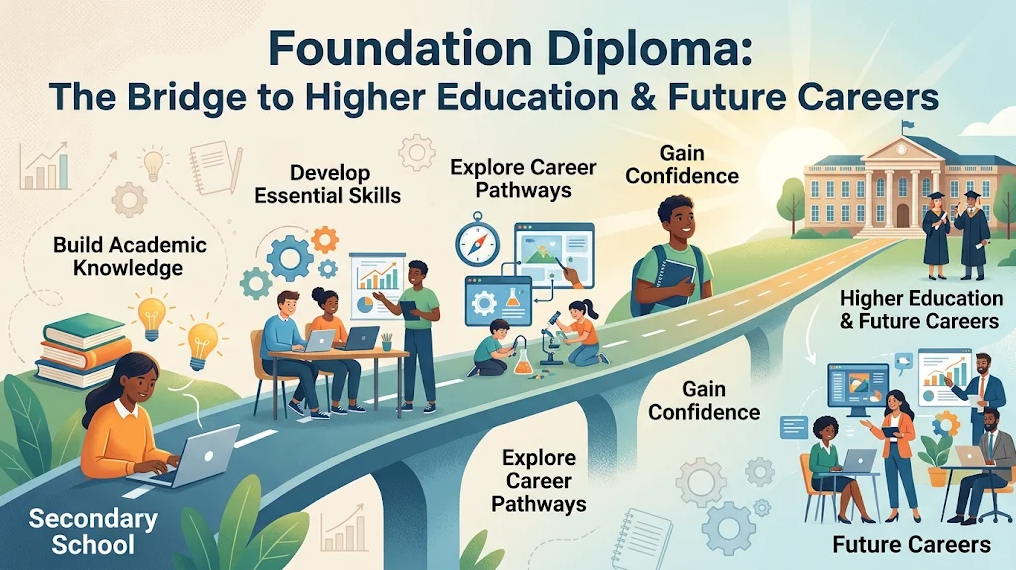

Choosing the right educational pathway after secondary school is an important decision that can influence a student’s academic development and professional future. While some students feel ready to enter a degree programme immediately, others may benefit from additional preparation before taking the next step. This is where a foundation diploma can make a meaningful difference by helping learners strengthen their academic knowledge, develop essential skills, and gain a clearer understanding of their future goals.
Rather than rushing into higher education without adequate preparation, students can use this learning opportunity to build confidence and establish a strong foundation for long-term success. Understanding its purpose, benefits, and potential progression opportunities can help students and parents make informed educational decisions.
What Is a Foundation Diploma?
A foundation diploma is generally a preparatory qualification designed to help students transition from secondary education to further academic study. Depending on the institution and programme, it may introduce learners to fundamental subjects, academic expectations, and practical learning methods required for more advanced qualifications.
The curriculum can include subjects such as English, mathematics, business fundamentals, information technology, and other introductory topics relevant to a student’s intended field of study. Some programmes also focus on research, presentations, teamwork, and independent learning.
One of the main purposes of this qualification is to bridge the gap between school-level education and higher academic expectations. Students learn how to approach assignments, organise information, analyse problems, and communicate ideas effectively.
However, programme structures, admission requirements, and progression options vary between institutions. Therefore, prospective students should review the specific course details before making a decision.
Why Is This Qualification Important for Students?
Moving into higher education can involve significant changes in teaching methods, workload, and assessment styles. Students are often expected to take greater responsibility for their learning, manage deadlines independently, and demonstrate a deeper understanding of their subjects.
A preparatory programme can help make this transition more manageable. By developing essential academic habits before entering a degree course, students may feel better equipped to handle new challenges.
For example, learners who need to improve their written communication can practise preparing structured assignments. Those who struggle with time management can develop study schedules and learn how to prioritise tasks. Similarly, students who are unfamiliar with research-based learning can become more comfortable finding information, evaluating sources, and presenting conclusions.
These improvements can support academic progress while helping learners become more independent and confident.
Key Benefits of Studying a Foundation Diploma
1. Strengthening Academic Knowledge
A strong understanding of fundamental concepts makes it easier to approach advanced subjects. Preparatory courses revisit important principles and introduce new ideas that students may encounter during their future studies.
This additional learning period can be particularly helpful for students who want to refresh their knowledge after completing secondary school or prepare for a different academic direction.
2. Developing Essential Study Skills
Success in higher education requires more than remembering information. Students must also understand concepts, evaluate evidence, solve problems, and express their ideas clearly.
A structured learning environment can help learners improve their note-taking, research, presentation, and assignment-writing abilities. These skills remain valuable throughout university and beyond.
3. Exploring Academic Interests
Not every student knows which subject they want to pursue immediately after school. Some may be interested in business, while others may prefer technology, management, or another professional field.
An introductory programme can provide an opportunity to explore relevant subjects before committing to a more specialised qualification. This experience may help learners identify their strengths, interests, and preferred learning styles.
Students should check the subjects included in each programme to ensure they align with their intended progression pathway.
4. Building Confidence and Independence
The transition to further education can feel overwhelming, particularly for students who are unfamiliar with a more independent learning environment.
Through classroom activities, assignments, discussions, and collaborative projects, learners can gradually become more comfortable expressing their opinions and asking questions. They can also learn to manage responsibilities without relying entirely on teachers for direction.
Developing these habits early may make the next stage of education feel less intimidating.
5. Preparing for Future Career Opportunities
Although a foundation qualification is primarily intended to support further learning, the transferable skills gained during the programme may also be useful in professional environments.
Communication, teamwork, problem-solving, organisation, and digital literacy are relevant across many industries. Developing these abilities can help students prepare for future workplace expectations while continuing their education.
However, career opportunities depend on the qualification earned, the student’s experience, and the requirements of the intended profession.
How to Choose the Right Programme
Selecting a suitable course requires more than comparing tuition fees or programme duration. Students should consider their academic background, future ambitions, preferred learning environment, and available progression options.
The following factors can help guide the decision-making process.
Entry requirements: Check the minimum academic qualifications, English language expectations, and any additional admission criteria. Make sure the programme matches your current educational level.
Course curriculum: Review the modules and learning outcomes carefully. A suitable course should provide knowledge and skills relevant to your intended degree or area of interest.
Study duration: Compare the expected completion time with your personal commitments and future plans. Consider whether the schedule allows enough time for assignments, revision, and independent study.
Progression opportunities: Ask which qualifications or degree programmes may be available after successful completion. Confirm whether progression is guaranteed, conditional, or dependent on meeting specific academic requirements.
Student support: Access to academic guidance, learning resources, and constructive feedback can improve the overall educational experience. Find out what assistance is available throughout the course.
Prospective learners can explore the foundation diploma course information to understand the available study option and determine whether it aligns with their academic plans.
Making the Most of the Learning Experience
Enrolling in a preparatory programme is only the beginning. Students should adopt effective learning habits to gain the greatest possible benefit from their studies.
First, establish a realistic weekly timetable. Setting aside dedicated periods for reading, assignments, revision, and personal activities can prevent work from accumulating near deadlines.
Second, participate actively in lessons. Asking questions, discussing ideas, and seeking clarification can improve understanding and reveal areas that require additional attention.
Third, make use of feedback. Assessments are opportunities to identify weaknesses and improve performance. Rather than focusing exclusively on grades, students should understand the reasons behind their results and apply the lessons to future assignments.
Finally, maintain a clear academic objective. Whether the goal is to enter a degree programme, explore a new subject, or develop greater confidence, having a purpose can help students remain motivated throughout their studies.
The Role of a Supportive Learning Environment
The institution a student chooses can influence their overall educational experience. A positive learning environment should encourage participation, provide access to relevant resources, and help learners understand academic expectations.
When evaluating this school or another educational provider, prospective students should consider the teaching approach, available facilities, assessment methods, and support services. Speaking with an admissions adviser can also help clarify course details and progression requirements.
Students should not hesitate to ask practical questions about attendance, examinations, learning materials, fees, and the qualifications awarded upon completion. Obtaining clear answers before enrolling can prevent misunderstandings later.
A thoughtful choice allows learners to focus on their development while working towards realistic educational objectives.
Conclusion
Planning the next stage of education requires careful consideration of personal interests, academic readiness, and long-term ambitions. A foundation diploma can provide a structured opportunity to strengthen subject knowledge, develop independent learning skills, and prepare for the expectations of higher education.
By researching course content, comparing progression options, and choosing a supportive learning environment, students can make decisions that suit their individual circumstances. Equally important is the commitment to consistent study, active participation, and continuous improvement.
With a clear plan and the right preparation, learners can approach further education with greater confidence and a stronger understanding of the opportunities available to them. The objective is not simply to gain another qualification, but to develop the knowledge, skills, and mindset needed for continued academic and professional growth.
Don’t miss out — discover more stories only on Meet Celebrity.